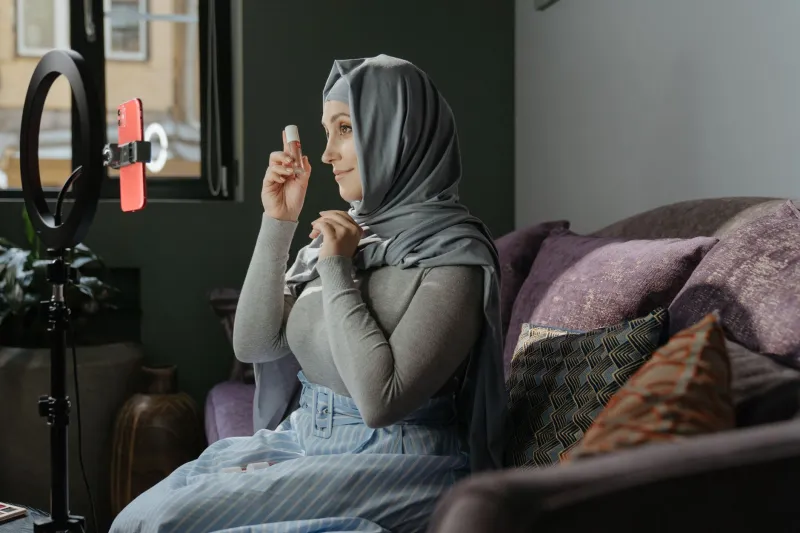
Punchlines Without a Passport: Arab-American Comedians Are Done Explaining the Joke
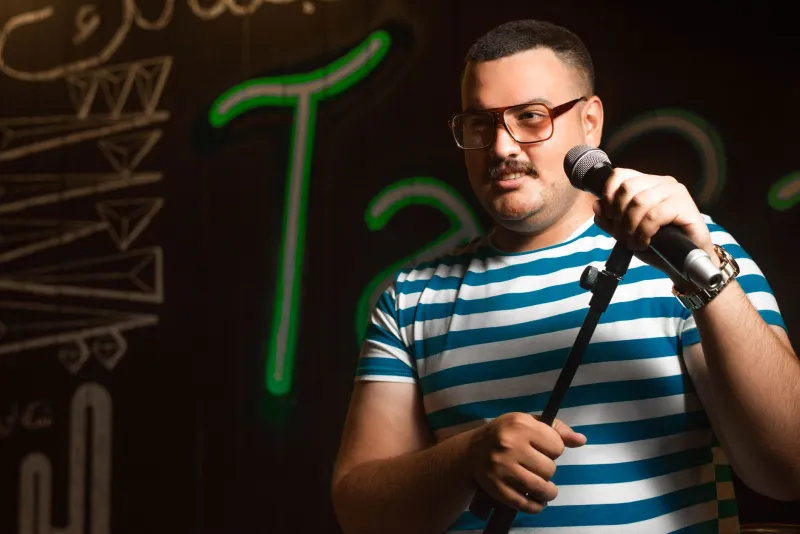
Here's a bit that's been making the rounds in Arab-American comedy circles lately: a sketch where a Lebanese mom calls her son to ask why he hasn't called, and then spends the entire call complaining that he called. The comments section is split almost perfectly in half — Arab-Americans losing their minds because it's so accurate, and everyone else going, "wait, is this supposed to be funny?"
That gap — that beautiful, frustrating, generative gap — is basically the entire subject of Arab-American comedy right now.
The Platform Problem
Let's be honest about something: the major streaming platforms have a complicated relationship with cultural specificity. Netflix will greenlight a show about literally any subculture as long as it can be summarized in one sentence for a non-member of that subculture. YouTube's algorithm rewards broad relatability. Instagram's Reels system punishes content that doesn't generate immediate engagement from a wide audience.
None of that is designed with "jokes about your teta hiding money in her bra" in mind.
Arab-American comedians working today are navigating a system that was built to flatten cultural nuance into something globally digestible. The pressure to "translate" — to add a parenthetical explanation, to soften a reference, to make sure the non-Arab viewer isn't lost — is real and constant. And a growing number of creators are simply refusing to do it.
"I got a note from a producer once that said my material was 'too niche,'" says Kareem, a Syrian-American stand-up based in New York who performs regularly at clubs in Brooklyn and Queens. "And I thought — niche compared to what? White suburban family dynamics? That's not niche, that's just the default. Everything else gets called niche."
What Makes Arab Comedy Arab
To understand why Arab-American comedy is so resistant to easy crossover, you have to understand a little about what makes Arab humor distinctive in the first place.
Arab comedic traditions lean heavily on wordplay — Arabic is a language built for puns in a way that doesn't survive translation. There's a whole genre of humor that lives in the gap between Modern Standard Arabic and regional dialects, where the same word means something completely different depending on whether you're from Cairo or Beirut or Amman. That stuff is untranslatable by design.
Then there's the family dynamics material, which is its own universe. Arab family humor operates on a specific frequency — the mix of genuine warmth and completely suffocating expectation, the way love and guilt are practically the same emotion, the particular chaos of a household where three generations have opinions about everything you do. It's not the same as Italian-American family comedy or Jewish family comedy, even though those comparisons get made constantly. The textures are different.
And then there's the political stuff, which is where things get genuinely complicated.
The Politics of Being Funny While Arab in America
Arab-American comedians have been dealing with the post-9/11 comedy landscape for over two decades now. The early 2000s produced a wave of Arab-American comics who essentially built careers on defusing stereotypes — the "I'm not a terrorist, I swear" school of comedy that served a real social function at a specific cultural moment but also, let's be real, was exhausting to sustain.
The current generation isn't interested in that deal. They're not performing reassurance. They're not asking for permission to exist in the room. The comedy coming out of Arab-American spaces right now is angrier, weirder, more specific, and more willing to make the audience uncomfortable.
Dina, a Palestinian-American sketch comedian who has been building a following on YouTube and Instagram, puts it plainly: "My job is not to make non-Arabs comfortable with Arabs. My job is to make Arabs feel seen. If other people come along for the ride, great. But I'm not changing the destination."
Her most-viewed sketch — a parody of a corporate diversity training that features a Palestinian-American employee being asked to explain her "background" while her coworkers visibly check out — has over two million views. The comments are a fascinating sociological document: Arab-Americans quoting it back to each other, non-Arab viewers asking genuine questions, and a small but vocal contingent who clearly didn't get that it was satire.
The Loyal Fanbase Model
Here's the thing about refusing to dilute your material: it builds a different kind of audience. The Arab-American comedians who have committed to cultural specificity aren't chasing viral moments in the traditional sense. They're building communities.
The engagement numbers on culturally specific Arab-American comedy content tend to be intense even when the reach is narrower. Comments sections read like family group chats. People tag their parents, their cousins, their friends from back home. The content circulates through WhatsApp groups and private Discord servers in ways that don't show up in standard analytics.
That kind of loyalty is hard to manufacture and even harder to buy. It's also, increasingly, what brands are actually looking for — not just raw eyeballs, but real community.
Netflix has started to notice. The platform's recent investments in Arabic-language comedy content, including stand-up specials and sketch shows, signal that someone in the building has figured out that there's a massive, underserved audience here. Whether those investments will extend to Arab-American creators working in English — the weirder, harder-to-categorize space — remains to be seen.
The Algorithm Will Catch Up Eventually
Or maybe it won't, and that's fine too.
The most interesting thing about Arab-American comedy right now is that it doesn't seem to need the algorithm's approval to thrive. The creators doing the most culturally specific work are also the ones with the most devoted followings, the most interesting live show scenes, and the most creative control over their output.
In a media landscape where everyone is chasing the same viral formula, there's something genuinely countercultural about a comedian who decides the joke is funnier if you have to look it up. Arab-American comedy isn't waiting for the mainstream to catch up. It's already moved on to the next bit.