Scroll, Style, Represent: The Arab-American Gen Z Creators Quietly Redefining American Fashion Online
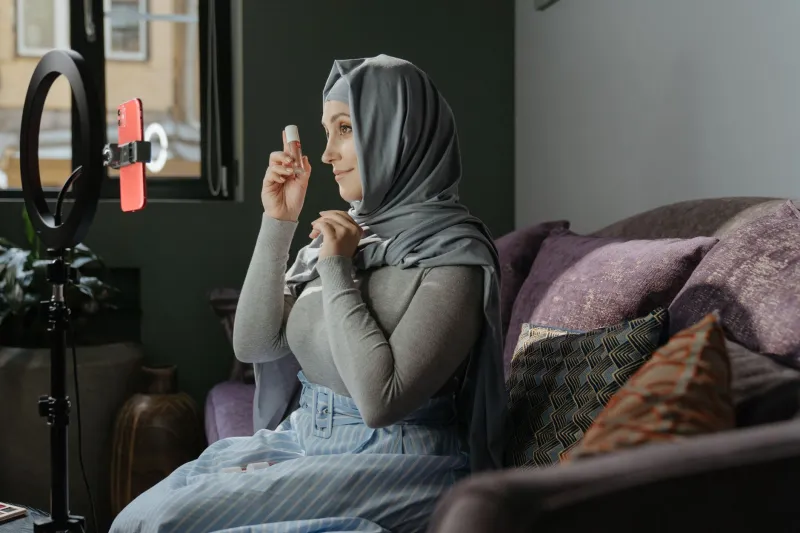
Forget the traditional fashion week invite. Forget the publicist, the agency, and the carefully curated brand deal handed down from some midtown Manhattan office. A growing wave of Arab-American Gen Z creators is building genuine fashion influence from their bedrooms, their college apartments, and the sidewalks of cities like Dearborn, Houston, and Brooklyn — and they're doing it without asking anyone's permission.
These aren't influencers chasing a moment. They're building movements.
The Gatekeepers Didn't Open the Door, So They Built Their Own
For decades, Arab-American women in particular existed at the edge of mainstream American fashion — visible enough to be exoticized, but never centered. The hijab was treated as a trend piece when brands felt bold, and then quietly shelved when the mood shifted. Gen Z creators didn't wait around for that cycle to repeat.
Take the approach of creators like those building modest fashion communities across TikTok's #HijabFashion and #ModestOOTD tags, which have collectively racked up billions of views. What's striking isn't just the numbers — it's the texture of what they're building. Comment sections that feel like group chats. DMs that turn into friendships. Followers who show up not because an algorithm pushed a post, but because they genuinely feel seen.
These creators are filling a void that the American fashion industry spent years pretending didn't exist.
Modest Fashion Meets Maximalist Personality
One of the biggest misconceptions outsiders carry into this space is that modest fashion means muted fashion. Spend twenty minutes on the right corner of TikTok and that idea evaporates fast.
Arab-American creators are layering abayas over wide-leg trousers, pairing head-wraps with vintage Levi's, and building entire aesthetic identities around the tension between heritage and hyper-contemporary streetwear. The color palettes are bold. The silhouettes are intentional. And the cultural references — a grandmother's embroidery pattern translated into a modern co-ord set, a Levantine print repurposed as a statement bag lining — are deeply specific in a way that mass-market fashion simply cannot replicate.
This specificity is exactly what's driving engagement. Gen Z audiences, across every demographic, are exhausted by the generic. They want to follow someone who actually has a point of view. Arab-American creators, drawing from layered identities that straddle two cultures, two languages, and often two generations of immigrant experience, have points of view in abundance.
The Business of Being Authentic
Here's where it gets interesting from a pure industry standpoint: these creators are monetizing, and they're doing it smartly.
Rather than chasing the mass brand deals that require them to sand down their identities to fit a broader demographic, many are gravitating toward partnerships with brands that actually align with their community — halal beauty companies, modest swimwear labels, Arab-owned accessories brands, and a growing number of mainstream names that have woken up to the purchasing power of Muslim and Arab-American consumers.
Some are going further. Storefronts. Curated Amazon lists. Their own small-batch clothing lines dropped exclusively through Instagram. Digital lookbooks sold as PDFs. The creator economy has handed them a toolkit, and they're using every piece of it.
What they're not doing is diluting their content to chase brand safety scores. The creators gaining real traction in this space are the ones who talk openly about what it feels like to style an outfit for Eid and a job interview in the same week, or how they navigate the very American pressure to dress a certain way while staying true to what feels right for them. That honesty is the product.
TikTok as a Cultural Archive
There's something worth pausing on here that goes beyond fashion metrics. These creators are, almost accidentally, building a living archive of what Arab-American life looks and feels like in 2024 and 2025.
A styling video isn't just a styling video when the creator is explaining why she chose that particular shade of green because it reminds her of her teta's kitchen tiles in Amman. A haul video isn't just a haul when the creator is code-switching between Arabic and English mid-sentence, not for effect, but because that's genuinely how her brain works.
For Arab-American teenagers watching from suburban Ohio or central Florida, this content is doing something that no mainstream fashion magazine has ever managed to do: it's making them feel like their specific, complicated, beautiful version of American identity is worth celebrating. Worth dressing for.
Why the Industry Is Finally Starting to Pay Attention
Fashion's major players are notoriously slow to move, but even they can't ignore a market segment this engaged. The US Muslim consumer market alone is estimated to be worth over $100 billion annually, and Arab-Americans represent a significant and growing slice of that. Brands that figured this out early — and partnered authentically with creators who have genuine community trust — are already seeing the returns.
The key word there is authentically. Arab-American creators have seen enough performative inclusion to spot a hollow campaign from a mile away, and their audiences are even sharper. When a brand deal feels forced or tokenizing, the comment section says so immediately. This keeps the ecosystem honest in a way that traditional fashion advertising simply isn't.
The Next Chapter
What happens when these creators get bigger? Some will cross over into the mainstream fashion conversation in ways that feel genuinely additive rather than assimilationist. Others will stay rooted in their communities by choice, building smaller but deeply loyal audiences that are arguably more valuable per follower than any mega-influencer's passive scroll-by numbers.
Either way, the trajectory is clear. Arab-American Gen Z creators aren't waiting for the fashion industry to discover them. They've already built something real — something with community, commerce, and cultural weight behind it.
The industry can catch up when it's ready. These creators will be just fine in the meantime.