The Long Game: Arab-American Women Creators Who Are Building Empires, Not Just Followings
The word "influencer" has always had a shelf-life problem. It describes what someone does on a platform today, not what they're building for tomorrow. And for a growing cohort of Arab-American women operating in the digital space, that word has started to feel like a ceiling — one they're actively working to break through.
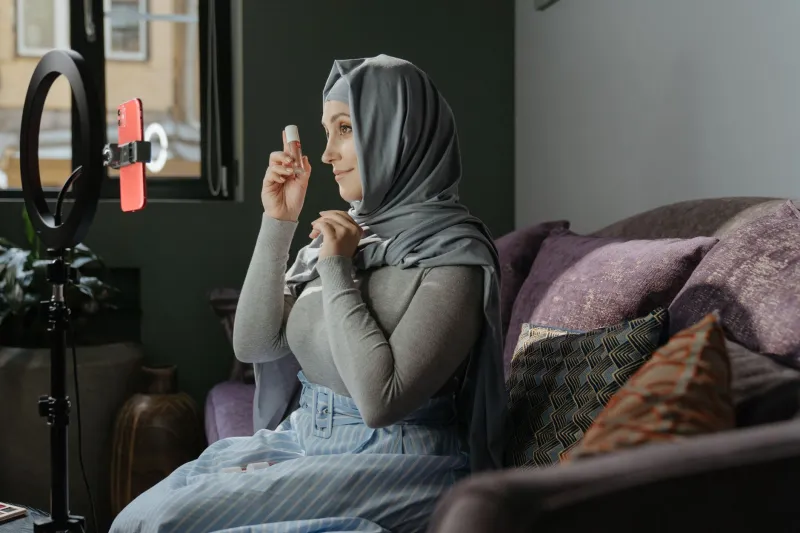
What's happening in this community right now isn't really about social media. It's about capital formation. It's about ownership. It's about a generation of women who grew up watching their parents build businesses with their hands and their backs, and who have decided to do the same thing — just with a ring light and a very deliberate content strategy.
From Audience to Asset
The traditional influencer playbook is pretty well-documented at this point: build a following, attract brand deals, collect a check, repeat until the algorithm changes and the whole thing collapses. It's a model that's made a lot of people temporarily famous and a smaller number of people actually wealthy — but the wealth tends to be precarious, tied entirely to platform access and audience attention.
The Arab-American women who are doing something different understand, almost instinctively, that an audience is only an asset if you own the relationship. Platform followings can evaporate. Email lists, product customers, and course enrollees cannot.
Sara, a Jordanian-American entrepreneur based in Houston, started as a lifestyle creator on Instagram about five years ago. Today, her Instagram is essentially a marketing channel for a business portfolio that includes a modest-fashion e-commerce brand, a business coaching program for Muslim women entrepreneurs, and a production company that creates branded content for halal-certified consumer brands.
"My following is maybe 200,000 people," she says. "That's not huge by influencer standards. But my revenue doesn't depend on that number going up. It depends on the trust I've built with the people who are already there."
That distinction — between reach and trust — is one that comes up constantly in conversations with Arab-American women creators who are thinking strategically about wealth.
The Cultural Framework Behind the Strategy
There's a cultural context to this that's worth unpacking. Arab families, broadly speaking, have a complicated relationship with the concept of employment versus ownership. For many Arab immigrant families in America, the goal was never to work for someone else forever — it was to eventually own something. A restaurant, a store, a building. Something you could hand to your children.
That ethos doesn't disappear just because the business is digital. If anything, it shapes how Arab-American women creators think about their work in ways that distinguish them from peers who came to content creation from a different cultural background.
"My dad owned a small grocery store," says Lena, a Lebanese-American creator and investor based in Los Angeles whose digital presence spans beauty, wellness, and personal finance content. "He worked seven days a week for thirty years. I grew up watching him build something. I didn't get into this to be someone's brand ambassador. I got into this to build something."
Lena's current portfolio includes a skincare line, a Substack newsletter with a paid subscriber tier, and — most unusually for someone who started as a beauty creator — a small stake in a women-focused fintech startup. She's 29.
The Masterclass Economy
One of the most significant revenue streams for Arab-American women creators who are thinking long-term is education. The "course creator" space has exploded over the past several years, and Arab-American women have been early and effective participants in it.
The appeal is structural: courses and masterclasses generate revenue that isn't tied to brand deals or platform algorithms. Once built, they can sell indefinitely. They also position the creator as an expert rather than a personality, which has meaningful implications for long-term brand equity.
The topics vary widely — business development, content strategy, Arabic language learning, Islamic finance, modest fashion styling, mental health for Muslim women — but the underlying logic is consistent. These creators are monetizing knowledge, not just attention.
"There's a huge audience of Arab-American women who want to build businesses and who don't see themselves in the mainstream entrepreneurship content space," says Yasmine, a Palestinian-American business coach and creator based in Chicago. "They're not watching Gary Vee. They want someone who understands the family dynamics, the cultural expectations, the specific challenges of being a Muslim woman entrepreneur in America. I speak to that audience, and they pay for it."
Investing in the Infrastructure
Beyond product lines and digital courses, the most forward-thinking Arab-American women creators are starting to think about their businesses in genuinely structural terms — intellectual property, equity stakes, production infrastructure.
A handful are launching production companies, recognizing that the ability to create content for other brands and platforms is a more durable business model than being talent yourself. Others are investing in real estate, using creator income as seed capital for assets that will appreciate independently of their online presence.
The conversation around financial literacy within Arab-American creator communities has also become more sophisticated. There are private group chats and informal networks where women share information about LLC structures, tax strategy, investment vehicles, and equity negotiation — knowledge that mainstream influencer culture rarely prioritizes.
"Nobody teaches you this stuff," says Lena. "You figure it out, or you find other women who have figured it out, and you share. That's actually very Arab, if you think about it. Community knowledge. Passing things down."
What Legacy Actually Looks Like
The word that comes up most often in these conversations isn't "viral" or "growth" or even "brand." It's "legacy." What are you leaving behind? What can you hand to your daughter, your niece, your community?
For Arab-American women who grew up watching their parents sacrifice enormously to build something in America, that question has real weight. The digital tools are new. The ambition is inherited.
What's emerging from this community isn't just a collection of successful individual businesses. It's a model — a proof of concept that you can build something durable and meaningful in the digital space without losing yourself in the process. Without becoming a product. Without letting the platform own you.
The algorithm will keep changing. The women profiled here are building things that don't need it to stay the same.