Wear Your Roots: Why Scent Has Become the Most Personal Form of Arab-American Self-Expression
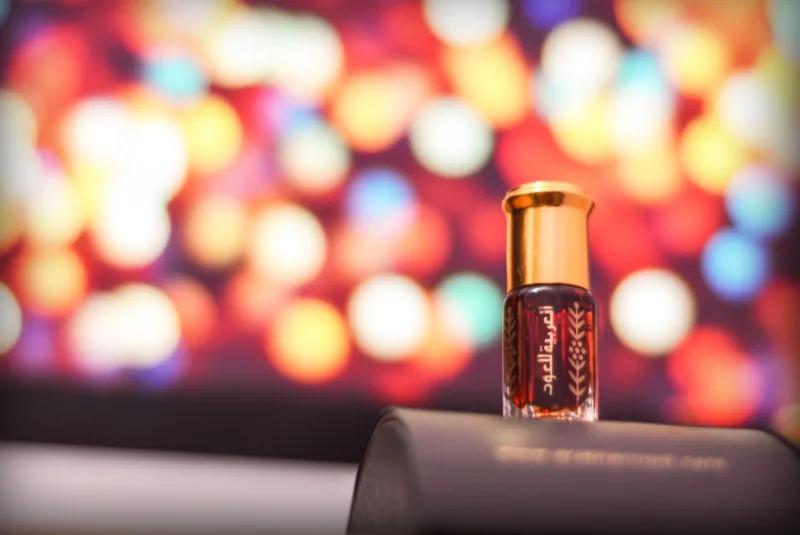
There's a moment a lot of Arab-Americans know without having to describe it. You walk into your grandmother's house, or maybe a relative's apartment in Dearborn or Paterson or Anaheim, and before you even take off your shoes, you're hit with it — that warm, resinous, almost-smoky smell that somehow feels like a hug and a history lesson at the same time. That's oud. And for a generation of Arab-Americans who grew up code-switching between two worlds, that smell is basically a passport.
Fragrance has always held a serious place in Arab culture. We're talking centuries of tradition — from the incense burned in mosques and homes to the elaborate gifting rituals around perfume that still play out at weddings and family gatherings across the Arab world. But something interesting is happening in America right now. Scent isn't just nostalgia anymore. For young Arab-Americans, it's become a deliberate identity statement — a way of saying I'm here, I'm from somewhere, and I'm not hiding it.
The Neuroscience of Belonging
It's not just poetic to say that smell is the most emotionally loaded of our senses — it's literally how the brain works. The olfactory system has a direct line to the limbic system, the part of the brain that handles memory and emotion. Dr. Rachel Herz, a cognitive neuroscientist who has written extensively on scent and identity, has described smell as "the sense of emotion and memory" in a way that no other sense quite matches.
For diaspora communities, that neurological shortcut is especially loaded. When you grow up between cultures — eating shawarma for dinner but going to prom on Friday, speaking Arabic at home but English everywhere else — your sensory memories become anchors. Smell, more than music or food or even language, can drop you back into a specific cultural moment without warning. For Arab-Americans, oud does that work constantly.
"The first time I wore oud outside the house — like, intentionally, as a choice — felt like a coming-out moment," says Nadia, a 24-year-old Palestinian-American content creator based in Chicago. "I'd grown up thinking it was just something old people wore. Then I realized it was mine. It was something American culture couldn't claim or rebrand without me."
Gen Z Is Reclaiming the Bottle
There's a generational shift happening in how young Arab-Americans relate to traditional scents. For older generations, wearing oud in public sometimes came with anxiety — the fear of being "too much," too foreign, too visible in the wrong way. Post-9/11 America made a lot of Arab families shrink in subtle ways, and fragrance was one of the casualties.
But Gen Z doesn't seem to be carrying that same weight. If anything, they're overcorrecting — and beautifully so. TikTok and Instagram have created communities around "Arabic perfume culture" that are pulling in millions of views, with creators doing deep dives on traditional attar blends, reviewing niche oud houses, and explaining the cultural context behind ingredients like ambergris, rose taif, and white musk.
The hashtag #OudReview has accumulated hundreds of millions of views on TikTok. Arab-American creators are a significant part of that conversation, and they're not just reviewing products — they're telling stories. They're explaining why their mother kept a specific bakhoor blend in a wooden box. They're talking about the perfume their grandfather wore that they can't find anymore. They're connecting scent to grief, to joy, to the specific ache of being from somewhere you've never fully lived.
The Market Is Listening
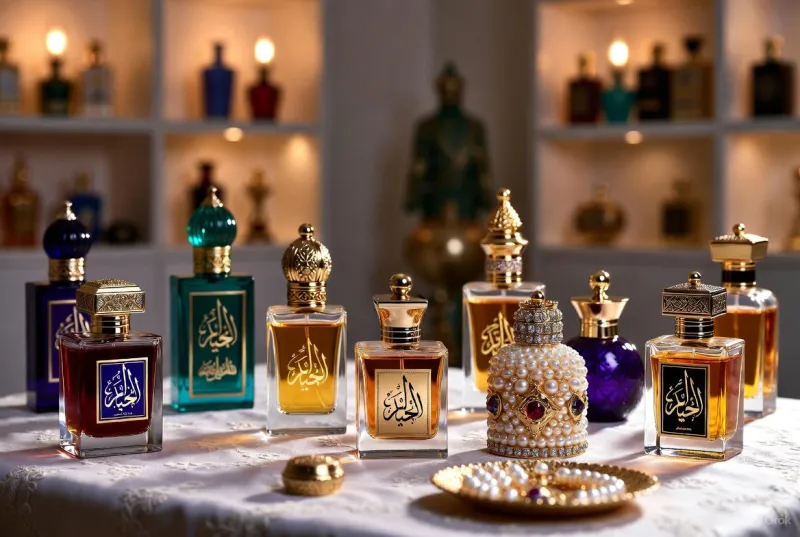
Brands are paying attention. The American fragrance market, long dominated by French luxury houses and celebrity vanity projects, has started to notice that there's a serious appetite for Arabic-inspired perfumery that goes beyond novelty. Niche houses like Swiss Arabian, Rasasi, and Lattafa have expanded their US retail footprints significantly in recent years. Meanwhile, Arab-American entrepreneurs have started launching their own fragrance lines that sit at the intersection of heritage and contemporary branding.
What's notable is that these aren't products being marketed at Arab-Americans as some kind of ethnic niche. They're being positioned as premium, universal products that happen to carry Arab cultural DNA. That's a meaningful distinction. It means the culture is setting terms, not just filling a slot.
Cultural theorist and writer Dr. Evelyn Alsultany, who has written about Arab-American representation in media, has noted that "the body itself becomes a site of cultural negotiation for diaspora communities." Fragrance fits that framework almost too perfectly. What you wear on your skin — what you choose to let others smell on you — is one of the most intimate expressions of who you are.
More Than a Trend
It would be easy to slot this into a broader trend piece about "ethnic beauty going mainstream" or whatever the current industry language is. But that framing misses the point. For Arab-Americans, fragrance was never about the mainstream. It was never about being discovered or validated by a non-Arab audience.
The reason scent is such a powerful identity tool right now is precisely because it resists the flattening that digital culture tends to do to everything else. You can screenshot an outfit. You can sample a playlist. But you can't fully transmit a smell through a screen. There's something irreducibly physical about fragrance that makes it uniquely resistant to being stripped of its context.
In a world where Arab-American culture is increasingly visible — in music, in food, in fashion — scent remains one of the last things that can't be fully consumed from a distance. You have to be close. You have to be present. And for a community that has spent decades fighting for the right to be seen on their own terms, there's something quietly radical about that.
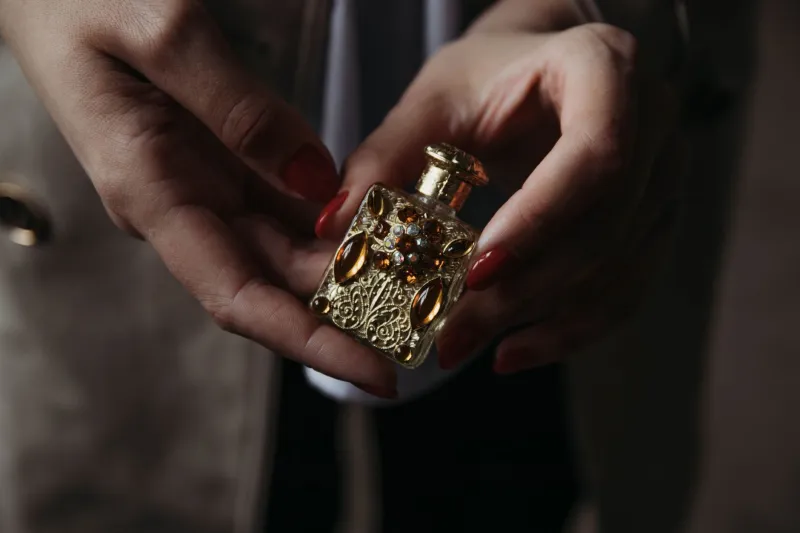
The bottle on your dresser isn't just a perfume. It's a conversation, a memory, and sometimes, a very gentle form of resistance.