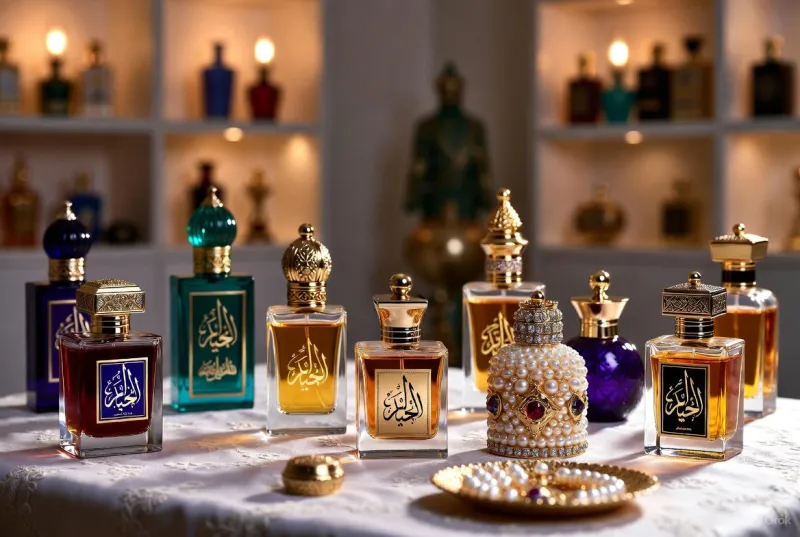
The Molecule Taking Over America's Beauty Aisles Has Arab Roots — And Nobody's Talking About It
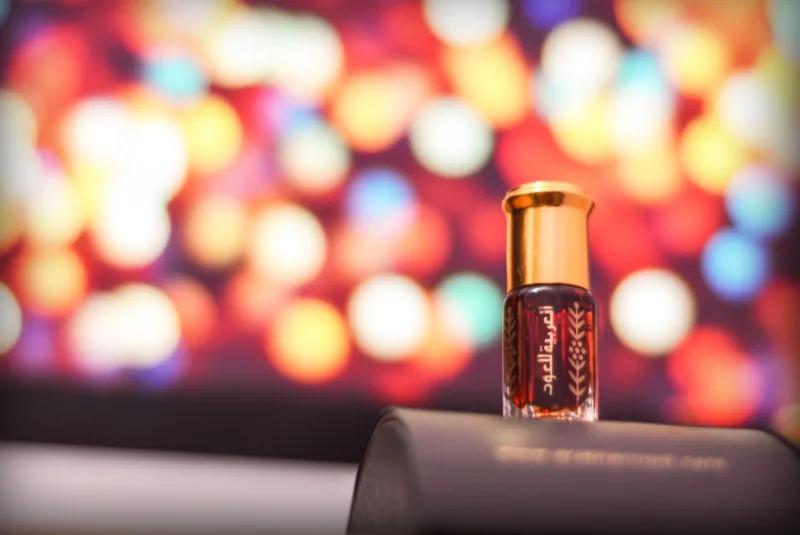
Walk into any Ulta Beauty right now and do a slow lap around the fragrance section. Somewhere between the celebrity-endorsed body mists and the sleek minimalist bottles promising to make you smell like "clean skin" or "a warm hug," you'll find a word showing up over and over again: musk. Sometimes it's listed as ambroxan. Sometimes it hides under phrases like "skin-scent molecule" or "sensorial warmth." But the throughline is unmistakable — and if you trace it back far enough, you end up somewhere the marketing copy almost never mentions: the ancient perfumery traditions of the Arab world.
This is the story of how a scent philosophy that has been central to Middle Eastern culture for centuries quietly infiltrated mainstream American beauty, wellness, and fragrance — and why the industry is only now starting to catch up to what Arab perfumers have known all along.
What Even Is Ambroxan, and Why Is Everyone Obsessed?
Let's get the science out of the way first, because it's actually fascinating. Ambroxan is a synthetic molecule derived from ambergris — a substance historically produced by sperm whales and traded at extraordinary prices across the Arab world, Persia, and beyond for over a thousand years. It was used in everything from royal perfumes to medicinal preparations, and its warm, woody, almost skin-like quality made it one of the most prized ingredients in oud-heavy Arabic fragrances.
The synthetic version, ambroxan, was developed in the mid-twentieth century as a more ethical and scalable alternative. But here's the kicker: it's what perfumers call a "skin amplifier." It doesn't just smell like something — it makes your own natural scent bloom around it. That's why fragrances built around it feel so personal, so intimate, so impossible to describe to someone who hasn't smelled them on your skin.
"It's not a fragrance note in the traditional Western sense," explains one independent perfumer based in New York who spent years studying under masters in Dubai and Grasse, France. "In Arab perfumery, the goal was never to smell like a flower or a fruit. It was to smell like you, but elevated. Ambroxan does exactly that."
From the Souk to the Supply Chain
For most of American beauty history, the dominant fragrance philosophy came from France — sharp, structured, built around top notes that announced themselves and base notes that faded politely. The idea of a scent that deepened over time, that got more interesting as your body heat activated it, wasn't really part of the mainstream American conversation.
That started shifting around 2015, when niche fragrance culture began bleeding into the broader wellness boom. Suddenly, people weren't just buying perfume — they were researching it. Reddit threads dedicated to fragrance layering. YouTube channels breaking down the chemistry of individual molecules. TikTok creators posting "dupe" videos comparing a $300 niche bottle to a $30 drugstore find.
And what were the most-duped, most-discussed, most-obsessed-over fragrances in those communities? Almost without exception, they were built around musk and ambroxan. Maison Margiela's Replica line. Baccarat Rouge 540. Kilian's Amor Amor. The connective tissue between all of them traces back to the same scent DNA that Arab perfumers were working with centuries before any of those brands existed.
Entrepreneurs noticed. A wave of Arab-American founders began launching fragrance lines that made this lineage explicit rather than obscured — brands that named their ingredients proudly, that talked about oud and amber and musk as cultural inheritance rather than exotic novelty. And they found an audience that was hungry for exactly that kind of authenticity.
Target Shelves and the Democratization of a Tradition
Here's where it gets really interesting for the average American consumer. The prestige fragrance market picking up on ambroxan is one thing. But the moment you start seeing musk-forward body lotions and hair mists at Target's beauty section, something bigger is happening.
Mass-market beauty brands have spent the last three years quietly reformulating their bestsellers around skin-scent molecules. The "clean" fragrance trend — which promised to smell like nothing artificial, just warmth and skin — turned out to be, essentially, a repackaging of what Arab perfumery had always prioritized. The irony isn't lost on people paying attention.
"American brands are selling 'skin scent' as if it's a new invention," says one fragrance educator who runs workshops in Chicago and Detroit, cities with significant Arab-American communities. "Walk into any traditional Arab household and you'll find bakhoor burning, musk oils on the dresser, amber resin on the shelf. This isn't new. It's just new to them."
That said, the democratization isn't entirely without value. When a $12 body oil at Walmart carries ambroxan as a key ingredient, it means more people are experiencing a scent philosophy that was once accessible only to those who knew where to look — or who grew up with it already in their homes.
The Wellness Angle Nobody Expected
Fragrance didn't stop at the beauty aisle. The musk and amber wave has crashed into wellness spaces too — and that's where things get genuinely surprising. Aromatherapy brands, meditation app partnerships, sleep-focused product lines, even some fitness recovery products have incorporated musk-adjacent molecules into their formulations, citing studies on scent's effect on cortisol levels and emotional regulation.
Some of this is marketing. Some of it is real. But the broader cultural shift it represents — toward scents that feel grounding, intimate, and body-connected rather than bright and fleeting — maps almost perfectly onto the sensory values that Arab perfumery has championed forever.
A perfumer who consults for several major wellness brands put it plainly: "The whole 'slow beauty' movement, the idea that your fragrance should evolve with you through the day, that it should feel like a second skin — that's not a new wellness philosophy. That's just oud culture, translated."
What Comes Next
The question now is whether mainstream American beauty will continue borrowing from this tradition without crediting it — or whether the growing visibility of Arab-American founders, educators, and tastemakers will force a more honest conversation about where these ideas actually come from.
There are encouraging signs. Fragrance media, which once treated Middle Eastern perfumery as a niche curiosity, is now dedicating real editorial space to oud culture, to the history of ambergris in Arab trade routes, to the philosophical differences between Western and Arab scent traditions. Consumers, especially younger ones, are asking better questions about ingredient provenance and cultural context.
And the founders who have been doing this work all along — the ones who launched Arab-rooted fragrance brands before ambroxan was a TikTok keyword — are finally getting the recognition their products always deserved.
For anyone who grew up in an Arab household, none of this feels like a revolution. It feels like the rest of America finally walking into a room that's been warm and beautifully scented for a very long time.
Welcome in. The bakhoor's been burning.