Once Upon a Time in the Arab World: How Ancient Storytelling Traditions Are Quietly Rewriting Hollywood's Playbook
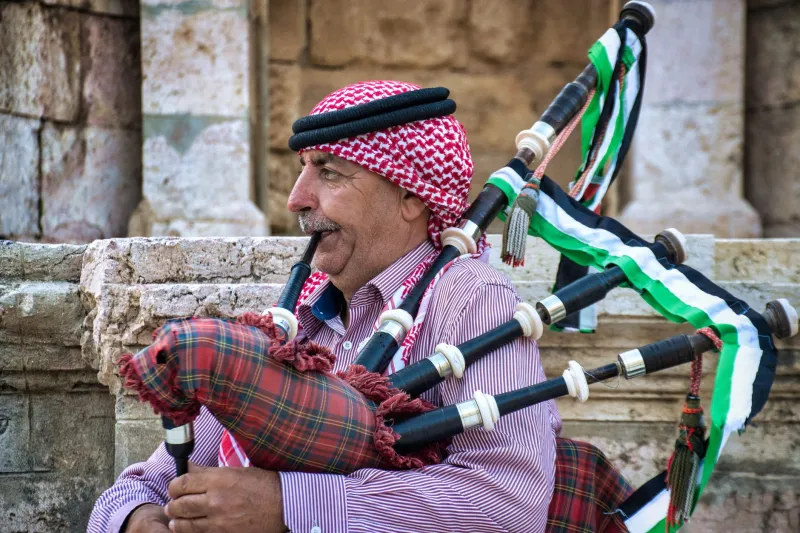
There's a scene in a lot of Arab households that probably sounds familiar if you grew up in one: a grandmother sitting cross-legged on the floor, surrounded by kids, spinning a story that has no clear beginning and somehow never really ends. The plot doubles back on itself. Characters appear and disappear. Morals are buried under layers of metaphor. And everyone is completely riveted.
That's not an accident. Arab storytelling is one of the oldest, most sophisticated narrative traditions on earth — and right now, it's having a serious moment in global entertainment. Not in an "exotic inspiration" kind of way. In a structural, fundamental, this-changes-how-we-tell-stories kind of way.
The Architecture of the Arab Narrative
Western storytelling — the kind they teach in every MFA program and screenwriting bootcamp — tends to be linear. You've got your three-act structure, your hero's journey, your clean resolution. Arabic narrative tradition operates on an entirely different logic.
Think of Alf Layla wa Layla — A Thousand and One Nights — the most famous example of the Arab storytelling framework. It's a story inside a story inside a story. Scheherazade doesn't just tell tales; she engineers suspense across an entire architecture of nested narratives, using cliffhangers, digressions, and moral ambiguity as survival tools. The story is the strategy.
This technique — what scholars call "frame narratives" or "mise en abyme" — has quietly infiltrated some of the most critically acclaimed content of the last decade. Shows like Westworld, films like Everything Everywhere All at Once, and the entire genre of prestige TV that refuses to give audiences easy answers owe more to Scheherazade than to Aristotle. Whether the creators know it or not.
From Campfire to Camera
But some creators know it very much.
Hany Abu-Assad, the Palestinian-Dutch filmmaker behind Paradise Now and Omar, has spoken openly about how oral storytelling traditions shaped his approach to character and moral complexity. His films don't offer villains and heroes in the Hollywood mold — they offer people, complicated and contradictory, the way Arab oral tradition always has.
"In our tradition, the storyteller doesn't judge," Abu-Assad has said in interviews. "The storyteller presents. The audience does the work."
That philosophy is increasingly the one that premium audiences — especially younger viewers — are demanding. The era of the tidy moral lesson is over. People want ambiguity. They want to sit with discomfort. They want, whether they realize it or not, the kind of storytelling that Arab grandmothers have been delivering for centuries.
Netflix and other streaming platforms are taking note. The explosion of Arabic-language content on major platforms isn't just about serving Arab diaspora audiences — it's about tapping into a narrative tradition that feels genuinely fresh to global viewers who've grown up on a diet of Western story structure.
The Oral Tradition Goes Digital
One of the most fascinating evolutions happening right now is how Arab oral storytelling is finding new life in digital formats. The hakawati — the traditional Arab storyteller who would hold court in coffeehouses, spinning epic tales for crowds — has essentially been reborn as a podcaster, a TikTok creator, a YouTube essayist.
Creators like Lebanese-American writer and performer Lena Khalaf Tuffaha have drawn direct lines between their digital work and the oral traditions of their families. The rhythm, the repetition, the way a story circles back to its own beginning — these aren't stylistic quirks. They're inherited techniques.
On TikTok, Arab-American creators have built massive followings partly because their storytelling instincts are different. There's a warmth, a digressive quality, a willingness to let a story breathe that cuts through the noise of content that's been engineered within an inch of its life.
Hollywood Is Listening — Slowly
The influence is moving upstream too. Western novelists and screenwriters are increasingly drawing on Arab narrative structures, sometimes through direct study and sometimes through cultural osmosis.
Author Diana Abu-Jaber, whose novels blend Arab-American identity with lush, layered storytelling, has described the way her grandmother's stories — full of repetition, circularity, and what she calls "the long way around" — fundamentally shaped how she constructs plot. Her work has been adapted and praised precisely because it doesn't feel like anything else on the American literary shelf.
In Hollywood, the conversation is shifting too. Writers' rooms that once treated "Middle Eastern" as a setting rather than a source of craft are beginning to hire Arab-American writers not just for authenticity checks but for their storytelling instincts. There's a growing recognition that Arab narrative tradition solves problems that Western structure creates — particularly around emotional complexity and the kind of moral ambiguity that contemporary audiences crave.
Why This Matters Beyond the Screen
It's worth stepping back and asking why this is happening now. Part of it is demographics — the Arab diaspora in the US is large, educated, and increasingly vocal about seeing their cultural traditions represented with depth rather than stereotype. Part of it is the streaming revolution, which has made non-English content globally accessible in a way that was impossible a decade ago.
But there's something deeper going on too. Western culture is in the middle of a storytelling crisis. Franchises are exhausted. Formulas feel stale. Audiences are hungry for narratives that surprise them, challenge them, refuse to resolve neatly. Arab storytelling tradition — with its love of ambiguity, its comfort with the non-linear, its insistence that the journey matters more than the destination — offers exactly what the moment demands.
Scheherazade, after all, survived by being impossible to predict. The stories kept coming, kept twisting, kept refusing to end in the ways her audience expected. That's not a bad model for any storyteller trying to hold attention in 2024.
The Story Continues
What's exciting about this moment is that it's still early. The mainstream conversation about Arab cultural influence tends to focus on food, fashion, or music — the visible, consumable stuff. The deeper influence, the one happening at the level of narrative structure and storytelling philosophy, is only beginning to be recognized.
For Arab-Americans who grew up with these traditions in their bones — who know the feeling of a story that circles back, that digresses beautifully, that ends not with a conclusion but with a question — there's something deeply satisfying about watching the rest of the world catch up.
The Arab world's greatest export was never oil. It was always the story. And the world is finally, fully listening.