Silicon Valley Has a New Secret Weapon — and It Speaks Arabic
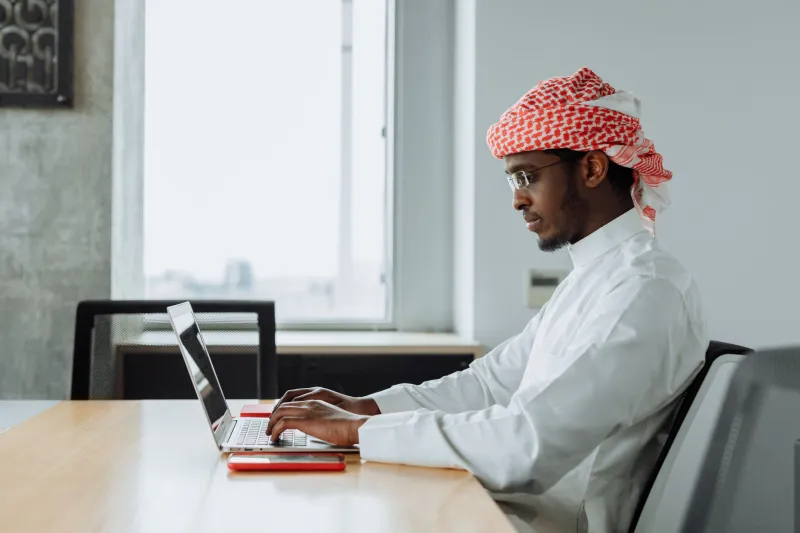
For years, the story of Arab-Americans in tech has been told mostly in footnotes — a co-founder here, an early engineer there. But something has shifted. Walk through the startup ecosystems of San Francisco, New York, or Austin right now and you'll find a growing cluster of founders who aren't just building for the mainstream. They're building from the margins, using lived cultural experience as their actual product roadmap. And investors are starting to pay very close attention.
The Arab diaspora in the US numbers somewhere between 3.5 and 4 million people, depending on who's counting. That's a market with serious purchasing power, deep transnational ties, and — until recently — almost no dedicated digital infrastructure built specifically with them in mind. That gap? It turns out it's worth billions.
The Problem That Became the Pitch
Most of the founders driving this wave will tell you the same thing: they built the product they couldn't find. Take the category of remittance and cross-border finance. Arab-Americans send significant amounts of money back to family in Egypt, Lebanon, Jordan, Palestine, and across the Gulf. Legacy wire transfer services are slow, expensive, and often inaccessible to people in sanctioned or financially unstable regions. A handful of Arab-American-led fintech startups have started attacking this problem directly, designing platforms that account for the specific banking realities of MENA countries rather than treating them as afterthoughts.
Similarly, the e-commerce space has seen a wave of platforms built around the idea of connecting diaspora consumers to artisans, food producers, and small businesses back home. Think of it like Etsy, but engineered around the realities of shipping from Amman or Beirut — currency fluctuations, customs complications, and the particular trust dynamics of Arab commercial culture, where a personal recommendation carries enormous weight. One founder described it plainly: "My mom wouldn't buy anything online from Lebanon unless someone she knew vouched for the seller. So we built the vouching into the platform."
Arabic as a Feature, Not an Afterthought
Here's something major tech companies have historically gotten wrong about Arabic: it's not just a language toggle. Arabic is written right to left, has multiple dialects that differ dramatically across regions, and carries enormous cultural nuance in how formality and relationships are expressed digitally. When WhatsApp or Instagram added Arabic support, they added a language. What they didn't add was cultural fluency.
That's the opening a new generation of social and communication platforms is walking through. Several startups are building apps where Arabic — specifically dialectal Arabic — is baked into the UX from day one. Features like dialect-aware autocorrect, voice notes optimized for Arabic phonetics, and community spaces organized around regional identity (Levantine, Gulf, North African) rather than just national borders are quietly becoming serious differentiators.
One platform making noise in this space has positioned itself as a kind of cultural layer on top of social media — a place where Arab-Americans can share content that would feel out of place or misunderstood on TikTok or Instagram, where algorithmic context doesn't exist for Eid humor, Arabic poetry slang, or the very specific comedic rhythm of a Syrian family dinner. The engagement numbers, according to people familiar with the platform, are striking — not because it's huge, but because it's sticky in ways that general social platforms rarely achieve with niche communities.
VC Money Is Finally Following the Culture
For a long time, Arab-American founders reported a frustrating experience in fundraising rooms: having to over-explain their market, justify the size of the opportunity, and fight through investor assumptions that "Arab" meant geographically distant or commercially risky. That dynamic hasn't disappeared entirely, but it's changing.
Part of the shift is demographic — a new generation of Arab-American investors and partners at VC firms is bringing different pattern recognition to deal flow. Part of it is the broader trend of investors chasing underserved communities after watching companies like Duolingo, Univision's digital arm, and various Black-owned media platforms demonstrate that cultural specificity isn't a ceiling — it's a launchpad.
Several Arab-American-founded startups have quietly crossed into the $50M–$100M valuation range in the last two years. None have hit unicorn status yet in a way that's been loudly publicized, but people inside the ecosystem will tell you the trajectory is pointing in one direction. The combination of diaspora market size, transnational commerce opportunity, and the underdigitized nature of Arab cultural life makes for a compelling investment thesis — once you actually look at the numbers.
The Homeland Connection Nobody's Fully Cracked Yet
Perhaps the most fascinating frontier is what founders are calling the "bridge economy" — digital platforms that don't just serve Arab-Americans, but actively connect them to economic and cultural life in their countries of origin in real time. This goes beyond remittances. Think: a platform where an Arab-American in Dearborn can watch a live performance by a Lebanese musician, buy a digital ticket, tip in dollars that convert instantly, and have that artist's merch shipped to their door — all within a single app experience.
Or consider the media angle. Arabic-language content on streaming platforms has exploded (as Almisk readers know well), but the discovery and community layer around that content is still underdeveloped. Who's building the Letterboxd for Arabic cinema? The Discord for fans of Gulf reality TV? The podcast network that bridges Levantine diaspora humor with audiences back in Beirut? These are the products that founders are quietly prototyping right now.
Why This Moment Is Different
What makes the current wave feel genuinely different from previous tech moments isn't just the money or the market size. It's the confidence. Arab-American founders today are less likely to sand down the cultural edges of their products to make them more "universally palatable." They're betting that the specificity is the value — that building something deeply right for one community is actually the best way to build something that eventually resonates far beyond it.
That's not a new idea in tech. It's basically the origin story of every platform that ever went from niche to mainstream. What's new is that Arab culture — its language, its aesthetics, its commercial logic, its humor — is finally being treated as a starting point rather than a complication.
The digital gold rush is on. And for once, the map was drawn in Arabic first.