Cast Iron, Clay Pots, and Coffee Grinders: The Arab Kitchen Tools Taking Over American Countertops
Walk through any well-stocked kitchen store in a major American city right now and you'll notice something a little different on the shelves. Wedged between the Instant Pots and the Japanese mandolines, there's a growing selection of equipment that looks unfamiliar to most shoppers — and that's exactly why they're picking it up.
Arab cooking tools have quietly become one of the most talked-about categories in the home cooking world. And not just in Arab-American households. We're talking about food bloggers in Portland, home chefs in Atlanta, and TikTok creators in Chicago who have zero personal connection to the Arab world but have become deeply, almost evangelically committed to their jurn, their dallah, or their tagine.
So what's actually going on here?
The Influencer Pipeline Is Real
If you want to understand how a traditional Yemeni stone mortar ends up on a kitchen counter in suburban Ohio, you have to start with social media. Specifically, you have to start with the wave of Arab and Arab-American food creators who have spent the last few years building serious audiences on YouTube, TikTok, and Instagram by cooking their grandmothers' recipes on camera.
Creators like Reem Kassis, whose cookbook work has crossed over into mainstream American food media, or the dozens of smaller accounts showing the process of making ful medames from scratch or grinding cardamom fresh for Arabic coffee — these videos do something powerful. They don't just show food. They show process. And process requires tools.
When viewers watch someone crack cardamom pods with a heavy stone mortar and then brew coffee in a long-handled dallah pot over an open flame, they don't just want the recipe. They want the whole experience. They want the tool.
"There's a tactile intimacy to traditional Arab cooking equipment that modern appliances can't replicate," says one Los Angeles-based food stylist who works with several Arab-American culinary brands. "People are tired of things that just plug in. They want to feel connected to what they're making."
What These Tools Actually Are (And Why They Work)
Let's break down some of the equipment that's generating the most buzz — and more importantly, why experienced cooks swear by them.
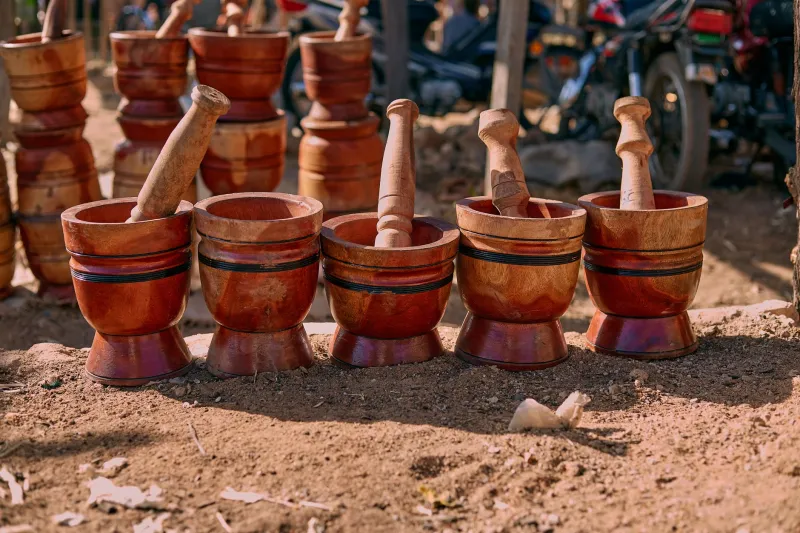
The Jurn (Stone Mortar and Pestle): This isn't your IKEA mortar. The traditional Arab jurn — particularly the large, deep version used in Gulf cooking — is a serious piece of equipment, often carved from black volcanic stone or granite. It's heavy. It's loud. And it produces a texture of ground spice, herb paste, or meat that a food processor simply cannot match. The friction and pressure applied manually releases oils and breaks down fibers in a way that a blade just chops through. American cooks who've made the switch rarely go back.
The Dallah: The long-spouted Arabic coffee pot is having a genuine moment. Originally designed for brewing qahwa — the lightly roasted, cardamom-spiced coffee common across the Gulf — the dallah has become a design object as much as a kitchen tool. Brass and copper versions are showing up as centerpieces on coffee bars and kitchen shelves. But plenty of people are actually using them, and discovering that the slow, low-heat brewing process produces a coffee experience that's completely different from anything a drip machine delivers.
Clay Tagines and Earthenware Pots: Borrowed heavily from North African cooking traditions, tagines have the longest crossover history of any Arab cooking tool in the American market. But the newer wave of interest goes beyond the standard Moroccan tagine. Levantine clay cookware — the kind used for slow-braised dishes like fasolia or slow-cooked lamb — is gaining traction among home cooks who've discovered that clay conducts heat in a way that produces dramatically different results from stainless steel or cast iron.
The Mehbaj (Coffee Mortar and Pestle Set): Specific to Gulf coffee culture, this is a paired mortar and pestle designed specifically for roasted coffee beans and cardamom. The rhythmic sound of the mehbaj being used was traditionally a signal of hospitality — an auditory invitation. Now, ASMR-adjacent videos of mehbaj use are racking up millions of views.
The Business Side of the Boom
American kitchenware retailers have noticed. Specialty stores and online marketplaces have dramatically expanded their Arab and Middle Eastern cooking equipment sections in the last two years. Search volume for terms like "Arabic coffee pot," "stone mortar Gulf style," and "tagine pot" has spiked consistently since 2022, according to Google Trends data.
Small Arab-American importers and artisan producers are the biggest beneficiaries. Many of these businesses — often family-run operations that have been supplying Arab-American communities for decades — are suddenly fielding orders from customers with no cultural connection to the products at all.
It's a genuine crossover moment, and it's being driven not by corporate marketing campaigns but by organic cultural enthusiasm.
More Than Just Kitchen Gear
There's something worth sitting with here that goes beyond cooking performance. The surge of interest in Arab kitchen tools is part of a broader pattern in American domestic culture — a turn away from convenience and toward meaning. People want to know where their food comes from, how it's made, and what story it carries.
Arab cooking traditions have very deep stories. The mehbaj carries centuries of hospitality culture. The tagine is inseparable from the social rituals of North African family life. Even the humble stone mortar is connected to a relationship with ingredients — with whole spices, fresh herbs, and manual labor — that industrial food culture has largely erased.
When an American home cook picks up a jurn and starts grinding their own spice blends, they're not just improving their food. They're opting into a different philosophy of cooking. And that, more than any trend cycle, is why this particular obsession doesn't look like it's going anywhere.
Can't pronounce jurn? Dallah? Mehbaj? That's okay. Look them up. Then look up where to buy one. Your cooking will thank you.