"Eat! Eat!": The Arab Grandmothers of TikTok Who Stole America's Feed
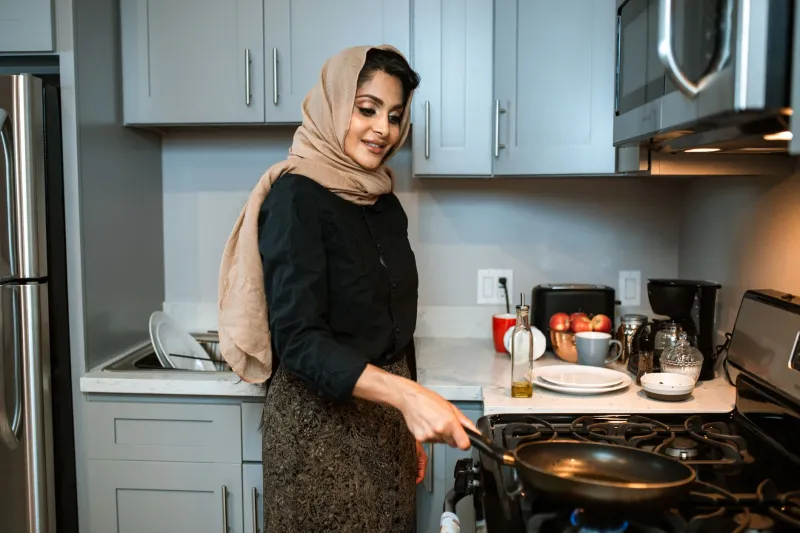
Somewhere between a dance challenge and a gadget unboxing, American TikTok developed a new obsession: somebody's grandmother, standing in a sunlit kitchen, aggressively insisting you eat more.
The accounts are easy to spot. A shaky-handed camera follows a teta through a recipe she's made ten thousand times and refuses to measure. Comments fill with "she's so real for this" and "protect her at all costs." The view counts dwarf those of trained chefs with ring lights. America has fallen hard for Arab grandma energy — and honestly, who could blame it?
The Stars of the Feed
The Hummus Artist. One LA-based account went viral when a Palestinian grandmother, unimpressed by her grandson's trendy food styling, started piping hummus into flower shapes and cat faces "for the views." The twist: her technique is genuinely masterful. She now has merch, and she still complains about the merch.
The Knafeh ASMR Queen. The stretch of melted cheese. The crackle of the shredded pastry hitting the pan. The syrup pour filmed in extreme close-up. Her knafeh videos have spawned hundreds of duets, including from professional bakers who openly admit they've been humbled.
The Deadpan Wisdom Account. Not a cooking channel, technically. A grandson simply films his Lebanese teta delivering unsolicited life advice while stirring something. Sample quote, now on T-shirts: "You're crying over him? Sit. I'll make you soup. Nobody has ever cried over soup."
The Honorary Teta. The genre's wildcard: a non-Arab creator who was adopted by a neighbor's grandmother and now documents her culinary boot camp. Viewers love the outsider's awe. "She yelled at me for salting the water wrong and I've never felt more loved," reads one top comment.
Why Grandma Energy Wins
There's a simple reason these accounts outperform polished content: they're the opposite of performance. In a feed engineered for perfection, a grandmother who refuses to measure anything, waves the camera away, and scolds her grandson mid-recipe feels like oxygen.
Food psychologists and social media watchers point to a broader craving for what's been dubbed "authenticity content" — unscripted, intergenerational, and rooted in real domestic life. Arab family culture, with its center-of-the-universe grandmother figure and its doctrine that love equals feeding people, translates to video perfectly. No production budget required. Just a kitchen, a pot, and a refusal to let anyone leave hungry.
There's also a quieter, sweeter layer: for many Arab-American viewers, these videos are a mirror. Comments sections are full of people saying they finally see their own grandmothers — once told to tone down accents and customs — being celebrated by millions of strangers.
From Side Character to Main Character
The cultural shift is real. Not long ago, Arab grandmothers in American media were background characters at best, stereotypes at worst. Now they're headliners with brand deals, cookbook offers, and fans who recognize their voices at the grocery store.
The best accounts handle it with characteristic grandma logic. When one teta was asked if she'd ever monetize her recipes, she reportedly shrugged and said the recipe would die with her unless someone wrote it down — so fine, film it, but first eat something.
That's the whole genre in one sentence, really: America showed up for the ASMR cheese pull and stayed for the soup, the scolding, and the unconditional love. The grandmothers, for their part, remain entirely unimpressed by the follower counts. There are dishes to make and grandchildren who look too thin.
Eat up, America. Teta's watching.