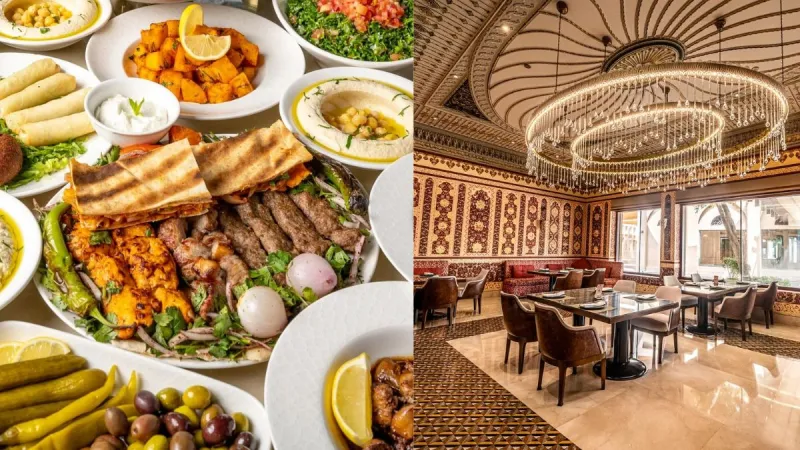
From Corner Carts to Corporate Deals: Arab-American Founders Are Quietly Taking Over the Halal Food Market
Walk into a Whole Foods in Dearborn, Michigan, or a Walmart in Houston's southwest corridor, and you'll notice something that would have seemed almost impossible a decade ago: halal-certified products sitting confidently on the same shelves as Tyson chicken and Kraft cheese. No asterisk, no specialty aisle tucked in the back near the international foods section. Just product, price, and a small green stamp that carries enormous cultural weight.
That shift didn't happen by accident. It was engineered — quietly, persistently, and brilliantly — by a generation of Arab-American entrepreneurs who saw a gap and decided to fill it themselves.
A Market Too Big to Ignore
The numbers are staggering. The global halal food market is projected to surpass $3 trillion by 2030, and the United States represents one of its most dynamic growth corridors. An estimated 3.45 million Muslims live in America, but the consumer base for halal products stretches far beyond that. Health-conscious shoppers, ethical meat buyers, and curious foodies have all discovered that halal standards — which emphasize animal welfare, cleanliness, and traceability — align neatly with their own values.
"Halal is no longer just a religious checkbox," says Kareem Nassar, co-founder of a Chicago-based premium halal butcher and delivery service that launched in 2019 and now ships to 38 states. "It's a quality signal. When people see that certification, they know the animal was raised and processed with care. That resonates with a lot of Americans who aren't Muslim at all."
Nassar's company isn't alone. Across the country, Arab-American founders are building food businesses at every level of the supply chain — from grass-fed lamb farms in Colorado to fast-casual Mediterranean chains in New York City competing directly with Sweetgreen and Chipotle for the lunch-rush dollar.
Fast-Casual, Full Flavor
Perhaps nowhere is the halal food boom more visible than in the fast-casual restaurant space. A new wave of Arab-American-owned chains is doing something their predecessors rarely attempted: going national.
These aren't the mom-and-pop falafel stands of the 1990s — though there's nothing wrong with those, God bless them. These are slick, Instagram-optimized concepts with loyalty apps, ghost kitchen partnerships, and expansion roadmaps that would make a Chick-fil-A franchisee nervous. Think shawarma wraps engineered for the drive-through window, or Lebanese-inspired grain bowls with QR-code menus and oat milk options on the side.
The strategic genius here is dual-market positioning. These brands speak fluently to Arab and Muslim communities who are hungry (literally and figuratively) for food that reflects their identity, while simultaneously packaging that identity in a format that mainstream American consumers find approachable and exciting. It's cultural pride dressed in a paper bag with a logo, and it's working.
Investors have taken notice. Several Arab-American-led food startups have closed significant seed and Series A rounds in the last three years, with venture firms in New York and Los Angeles recognizing that underserved communities with strong cultural food traditions represent enormous untapped market potential.
The Meat of the Matter
Beyond restaurants, premium halal meat suppliers are perhaps the most quietly powerful players in this revolution. For years, halal meat in America meant a trip to a small butcher in a specific zip code, cash only, limited cuts, take it or leave it. The supply chain was fragmented, quality was inconsistent, and scaling was nearly impossible.
A handful of Arab-American entrepreneurs decided to fix that from the ground up. They built relationships with ranchers, invested in USDA-compliant halal processing facilities, developed cold-chain logistics, and launched direct-to-consumer subscription models that put premium halal beef, lamb, and chicken on doorsteps across suburban America.
"We basically had to build the infrastructure ourselves," explains one Detroit-area founder who asked to remain unnamed ahead of a funding announcement. "There was no playbook. We looked at what companies like ButcherBox did for the natural meat market and said — why can't we do that for halal? Why does our community have to accept less?"
The answer, increasingly, is that it doesn't.
Specialty Ingredients and the Pantry Revolution
It's not just meat and restaurants. A quieter but equally significant movement is happening in the specialty ingredient space. Arab-American founders are launching brands built around pantry staples — pomegranate molasses, sumac, high-quality tahini, preserved lemons, and za'atar blends — and positioning them not as ethnic curiosities but as essential modern kitchen ingredients.
The timing is perfect. American home cooks, turbocharged by pandemic-era cooking ambitions and a decade of food media celebrating global flavors, are more adventurous than ever. When a brand can offer a jar of Lebanese tahini with clean branding, a compelling origin story, and a spot on the shelves at Target, the cultural moment and the commercial opportunity collide beautifully.
Some of these founders talk openly about wanting to do for Arab pantry ingredients what Goya did for Latin flavors — become the default, the trusted name, the one that crosses over from community staple to American household staple.
Keeping It Real While Scaling Up
The tension every founder in this space navigates is authenticity versus accessibility. Scale a product too aggressively, tweak the recipe to hit a lower price point, soften the flavor profile to avoid alienating a general market consumer — and you risk losing the very community that gave the brand its soul in the first place.
The entrepreneurs who seem to be getting it right are the ones who treat their community as the core customer, not an afterthought. They consult with religious scholars on certification standards. They source from Arab and Muslim farmers where possible. They hire from within the community. They tell their story honestly, in both English and Arabic.
"We never want our grandmothers to look at our product and not recognize it," says one founder of a growing halal snack brand. "That's the test. If Teta approves, we're good."
What Comes Next
The halal food industry in America is at an inflection point. The infrastructure is being built. The consumer appetite — from within the Muslim community and far beyond it — is real and growing. Capital is starting to flow. And a generation of Arab-American founders who grew up navigating two cultures are uniquely positioned to bridge them through food.
The corner cart didn't disappear. It just got a Series A and a national distribution deal. And honestly? That's a story worth savoring.