Spitting in Two Tongues: How Arab-American MCs Are Flipping the Script on US Hip-Hop
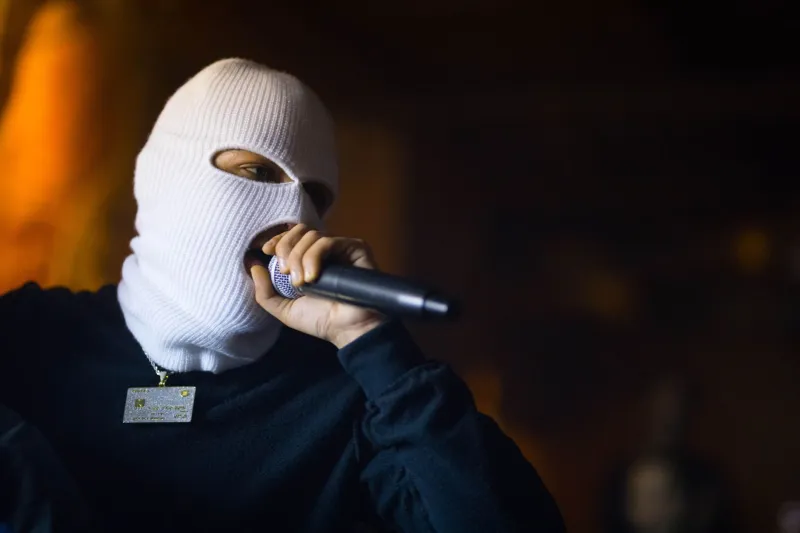
Somewhere between a Detroit freestyle session and a Cairo rooftop, a new sound was born. It doesn't fit neatly into any one box, and honestly, that's exactly the point. Arab and Arab-American hip-hop artists are stepping out of the margins and into the mainstream, bringing with them a sonic identity that feels as fresh as anything dropping on US charts right now.
This isn't a trend. It's a movement — and it's been building for years.
The Foundation Was Already There
Let's be real: Arab culture and hip-hop have always had more in common than people give them credit for. Both traditions are rooted in oral storytelling, poetic wordplay, and a raw commitment to speaking truth. Arabic poetry has centuries of history behind it — the kind of lyrical complexity that would make even the most seasoned battle rapper nod with respect.
When Arab-American kids growing up in cities like Detroit, Chicago, and Houston started picking up the mic in the '90s and early 2000s, they weren't just borrowing from hip-hop culture. They were bringing something entirely their own to it. The bilingual bars, the references to immigration and identity, the samples lifted from classic Arabic music — all of it added layers that the genre hadn't quite seen before.
Artists like Iron Sheik (not the wrestler) and early underground acts were laying groundwork that most mainstream audiences never heard. But those seeds didn't go to waste.
The New Wave Hitting Different
Fast forward to now, and the landscape has shifted dramatically. Artists like Felukah, an Egyptian-American rapper out of New York, are earning serious critical buzz for her ability to weave Arabic phrases into sharp, introspective verses without it ever feeling forced. Her music doesn't ask for permission — it just exists, confidently, in the space between two worlds.
Then there's Narcy (Yassin Alsalman), a Canadian-Iraqi artist who has been one of the most important voices in Arab hip-hop for over a decade. His work is politically charged, historically aware, and lyrically dense in the best possible way. He's not making music to be palatable — he's making music to be honest.
On the more mainstream-adjacent side, Massari — the Lebanese-Canadian R&B and hip-hop crossover artist — has shown that Arab artists can rack up serious streaming numbers without abandoning their roots. His blend of Arabic melodies and polished US-style production proved there's a massive appetite for this sound, if labels and platforms are willing to push it.
And younger artists are watching. A whole generation of Arab-American kids who grew up on both Nas and Fairuz are now in their 20s, making music that reflects exactly that dual experience.
The Sound Itself Is the Statement
What makes Arab hip-hop so compelling isn't just who's making it — it's how it sounds. Producers are sampling instruments like the oud, the qanun, and the darbuka in ways that feel genuinely innovative rather than gimmicky. When a trap hi-hat pattern sits underneath a haunting maqam melody, the result is something that stops you mid-scroll.
Bilingual wordplay adds another dimension entirely. Switching between Arabic and English mid-verse isn't just a stylistic choice — it's a reflection of how millions of Arab-Americans actually think and speak. The code-switching that happens in everyday life in Dearborn or Bay Ridge gets translated directly into the music. For Arab-American listeners, it's an experience of being truly seen. For everyone else, it's an invitation into a world they may not have encountered before.
Some artists are also pulling from distinctly regional Arab musical traditions — Khaleeji rhythms, Egyptian shaabi beats, Levantine folk melodies — and fusing them with everything from boom-bap to Afrobeats-influenced production. The results are genuinely hard to categorize, which in today's genre-fluid music landscape is basically a superpower.
Why Now? Why Here?
A few things are converging at the right moment. Streaming platforms have made it easier than ever for artists to build global audiences without needing a major label's blessing. Social media — especially TikTok — has allowed clips of Arab hip-hop to reach millions of users who might never have sought it out otherwise.
There's also a broader cultural shift happening in the US. Audiences are increasingly hungry for stories and sounds that go beyond the familiar. The success of non-English language content — from K-pop to Latin trap to Afrobeats — has opened doors and expanded what American listeners consider "their" music. Arab hip-hop is walking through those doors with something real to say.
The Arab-American community itself — estimated at somewhere between 3.5 and 4 million people in the US — has long been an underrepresented voice in mainstream entertainment. When these artists break through, it's not just a win for music. It's a moment of cultural recognition that resonates deeply.
What's Coming Next
The momentum is only building. More Arab-American artists are signing deals, getting playlist placements, and landing features with well-known names. Collaborations between Arab artists and established US rappers are becoming more common, and the cross-pollination is producing some genuinely exciting results.
For fans of hip-hop who want to stay ahead of the curve, this is the scene to watch. The artists coming up right now aren't waiting for the industry to figure out what to do with them. They're building their own lanes, on their own terms, and the music they're making is some of the most interesting stuff happening in American rap right now.
At Almisk, we'll be right here following every drop, every debut, and every moment when two worlds collide to create something neither could have made alone. Because that's exactly what Arab culture in America looks like — and it sounds incredible.